
Mollywood Times - Inside the Beautiful, Broken Machine of Cinema
Genre: Dark Comedy / Drama | Country: India | Language: Malayalam | Released: June 5, 2026
7/13/20264 min read
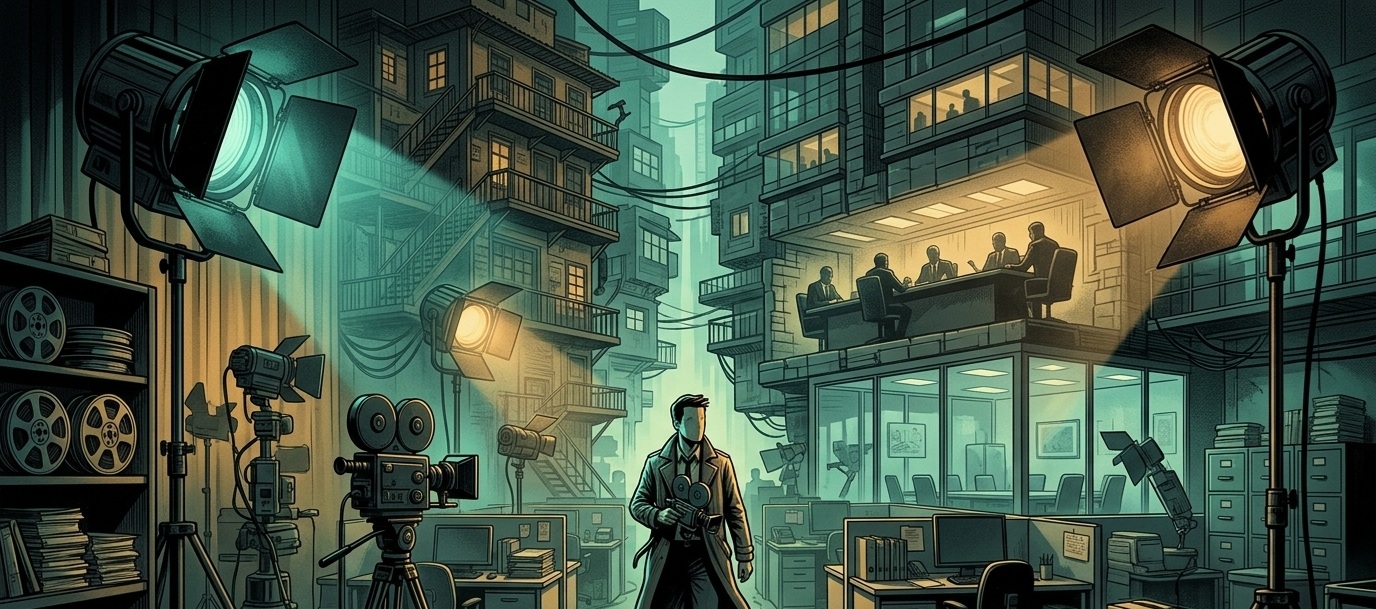
Vineeth Madhavan (the protagonist)wants one thing: to become cinema's greatest horror director. He's talented, obsessive, and convinced his vision can single-handedly drag the industry out of its creative rut. What starts as unwavering belief in his own artistic vision slowly, almost imperceptibly, curdles into obsession. It's the kind of obsession that tests every ideal he once claimed to cherish. There's a clear echo here of Ayn Rand's Howard Roark from The Fountainhead, the uncompromising artist who'd rather burn everything down than bend his vision an inch. But director Abhinav Sunder Nayak isn't interested in writing that kind of hero worship. This is deliberately not a conventional underdog story where talent eventually triumphs. It's something colder and more honest than that.
This is the second chapter in Nayak's unofficial "Success Trilogy," following 2022's Mukundan Unni Associates, another film that took a scalpel to ambition and the myth of merit. His trademark voice-overs and razor-sharp writing carry over fully intact here, giving the film the rhythm of someone narrating their own unraveling in real time. It plays, in many ways, like an insider's confession wrapped in dark comedy. This is less a story about one filmmaker's rise or fall than a document of how the machine actually runs. Though released as a hate letter to Malayalam cinema, its real target is bigger than any one industry: cinema itself, as an idea, as a business, as a battlefield.
This is where the film earns its keep. Nayak isn't just asking whether Vineeth will succeed. He's interrogating what success even means. Is it earned through pursuit and perseverance, or does it belong to whoever wants it most, regardless of talent? The film pushes auteur culture to its logical extreme, following the pursuit of artistic purity to a point where it stops looking noble and starts looking like self-destruction. Along the way it makes an unsentimental case that luck, networking, politics, and timing often matter more than the work itself. It quietly, persistently asks whether integrity can be negotiated once real stakes are on the table.
the director pulls back the curtain on the actual machinery few outsiders see: production rivalries, actor poaching, financial manipulation, creative compromises made under pressure, and the gatekeeping that decides whose film gets made at all. There's a sharp thread running through the film about randomness versus the myth of merit. It sets the comforting idea that karma or "positive manifestation" reward good work directly against the far less comforting reality of calculated scheming, image management, and manufactured popularity. It also isn't shy about interrogating what awards actually measure, or about the uncomfortable truth that a filmmaker's background, and how money and influence get quietly deployed around it, can shape outcomes in ways nobody says out loud. There's a pointed aside, too, about artists who build careers emulating someone else's style, or lifting scripts outright, mirrored against the celebrated author who's open about (or quietly relies on) a ghostwriter. Underneath all of it sits the oldest question in the room: is cinema art, or is it commerce? Nayak never pretends there's a clean answer.
Naslen Gafoor (as Vineeth Madhavan) delivers one of the boldest performances of his career here. He strips away the familiar charm that's carried his recent run of crowd-pleasers and fully inhabits Vineeth's arrogance, insecurity, and relentless ambition, without once angling for the audience's sympathy. It's a performance that trusts the film's coldness rather than softening it, and it's the reason Vineeth's unraveling actually lands.
None of it would carry the same weight without Nayak's direction holding the tone steady. He never lets the film tip fully into satire or fully into tragedy, keeping it balanced on a knife's edge that makes the darker turns land harder. The technical work backs him up at every turn. The cinematography favors close, unglamorous framing that keeps the focus on Vineeth's face rather than the industry's spectacle, and the editing keeps the film moving with a restlessness that mirrors its protagonist's own state of mind. It's the kind of craft that doesn't call attention to itself, but the film would fall apart without it.
The film's back half loosens into something that can initially read as repetition: hurdle after hurdle, setback after setback. But sit with it a little longer and that "repetition" starts to feel less like a structural stumble and more like the point. It's Vineeth's journey itself, the exhausting, cyclical grind of an artist who refuses to stop testing his own ideals against a world that keeps pushing back. It's less a flaw than a mirror. Where the film is on shakier ground is in how lightly it handles the question of background and influence. It gestures at how money and connections quietly tilt outcomes, but doesn't always follow that thread as far as its other ideas.
Why Watch It
Because it's rare to find a film this unsentimental about the industry that made it, one that dismantles the myths around artistic genius, success, and creative integrity without ever offering a tidy resolution. It's a celebration of an artist's perseverance and a confrontation with the machinery he's up against, held together by writing that never loses its edge and a lead performance built entirely on discomfort rather than charm.
And frankly, Abhinav Sunder Nayak himself is reason enough. If Mukundan Unni Associates stuck with you, if you were drawn in by that same cold, precise way he takes ambition apart, this is essentially him refining that voice with a bigger canvas and a sharper target. Anyone who's ever worked in a creative field, or watched from the outside and wondered what it actually takes to "make it," will find something to chew on here. If you want cinema that flatters the dream of success, skip this one. But if you want a film willing to sit in the discomfort of what pursuing that dream actually costs, and to ask, without blinking, whether it was ever worth it, this is one you should absolutely watch. Messy, provocative, and genuinely worth arguing about afterward.