The King's Warden Review – A Historical drama with heart
Genre: Historical Drama | Country: South Korea | Released: February 4, 2026
7/16/20263 min read
Historical dramas often thrive on palace intrigue, political conspiracies, and grand battles. The King's Warden takes a far more intimate approach. Rather than focusing on the struggle for the throne itself, it tells a deeply human story about two unlikely companions brought together during one of the Joseon Dynasty's darkest chapters. Anchored by heartfelt performances and quiet storytelling, the film finds remarkable emotional power in moments of kindness, loyalty, and sacrifice.
Set in 1457, the story follows Eom Heung-do, the chief of a remote mountain village, who hopes that hosting an exiled aristocrat will bring good fortune to his community. Instead, he is entrusted with Prince Nosan—the deposed teenage King Danjong, who has been stripped of his throne following his uncle's coup. Broken by betrayal and grief, the young king has little left except his dignity. What begins as a chance encounter gradually blossoms into a moving relationship that transforms both men, turning a well-known historical tragedy into an intimate story of humanity.
Directed by Jang Hang-jun, The King's Warden draws inspiration from one of the most poignant episodes in Korean history. King Danjong's exile and eventual death at the hands of his uncle, later crowned King Sejo, remain deeply rooted in Korea's collective memory. Danjong was formally restored as a legitimate king more than two centuries after his death, while the story surrounding his downfall continues to resonate in Korean culture. Rather than using history as a backdrop for spectacle, Jang builds the film around its emotional consequences, allowing the audience to experience this chapter of history through personal relationships instead of political exposition.
One of the film's greatest strengths is its restraint. Jang resists turning the story into a conventional political thriller and instead focuses on the evolving bond between Heung-do and the young king. Quiet conversations, shared meals, and small gestures of compassion carry as much emotional weight as the political events unfolding beyond the village. The deliberate pacing allows these relationships to develop naturally, making every emotional turning point feel genuine rather than manufactured.
At its heart, The King's Warden is a meditation on dignity after power has disappeared. Danjong has lost his throne, his court, and nearly everyone who stood beside him. The film is less interested in whether he can reclaim his crown than in exploring what remains of a person once every symbol of authority has been stripped away. Heung-do's journey unfolds in the opposite direction. He begins by hoping for good fortune but gradually discovers that loyalty and compassion are worth far more than personal gain. Their relationship forms the emotional backbone of the film, elevating it beyond a conventional historical drama.
Yoo Hae-jin delivers one of the finest performances of his career as Eom Heung-do. His portrayal balances warmth, humor, resilience, and quiet sorrow with remarkable ease, making him an instantly relatable protagonist. Park Ji-hoon is equally impressive as King Danjong, capturing both the vulnerability of a boy burdened by unimaginable loss and the quiet strength that still flickers beneath his despair. Their chemistry never feels forced, allowing the emotional connection between the two characters to grow organically. The supporting cast also contributes strong performances, adding authenticity to both the royal court and the rural village without overshadowing the central relationship.
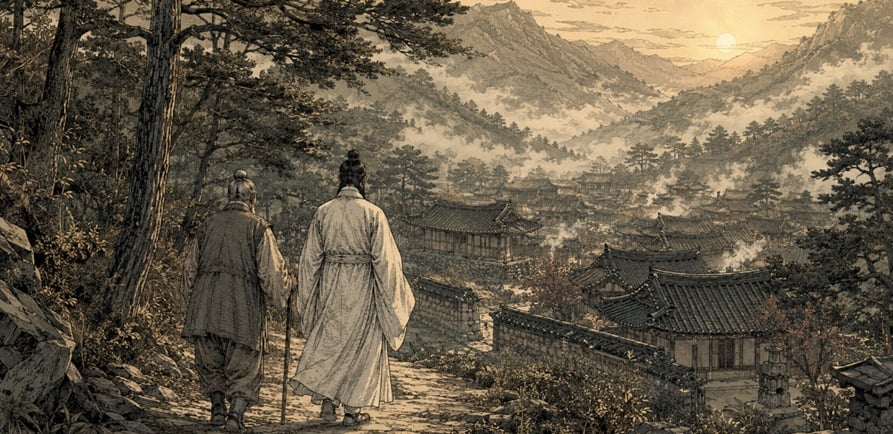
Visually, the film embraces the quiet beauty of the Joseon countryside. Sweeping mountain landscapes, traditional villages, and carefully composed interiors create an atmosphere that feels both peaceful and melancholic. The production design and costumes convincingly recreate the period without unnecessary grandeur, while Dalpalan's understated musical score gently enhances the emotional moments instead of overwhelming them. The measured editing complements the reflective nature of the story, allowing the audience to fully absorb its quieter scenes.
The film's deliberate pacing may not appeal to everyone. At just under two hours, it unfolds patiently, and some viewers may find portions of the middle act slower than expected. Those unfamiliar with King Danjong's story may also miss some of the historical and emotional nuances that Korean audiences immediately recognize. Even so, these are minor shortcomings in a film that consistently prioritizes emotional honesty over dramatic spectacle.
Why Watch It?
The King's Warden is more than a historical drama; it is a moving story about loyalty, compassion, and the quiet courage to stand beside someone when the world has abandoned them. Rather than relying on grand battles or palace intrigue, it finds its greatest strength in deeply human relationships and understated storytelling. Outstanding performances from Yoo Hae-jin and Park Ji-hoon, thoughtful direction from Jang Hang-jun, and a deep respect for history come together to create a film that is both emotionally resonant and quietly powerful.
Whether you're a longtime fan of Korean historical cinema or simply looking for a character-driven period drama with genuine heart, The King's Warden is an enjoyable cinematic experience.